
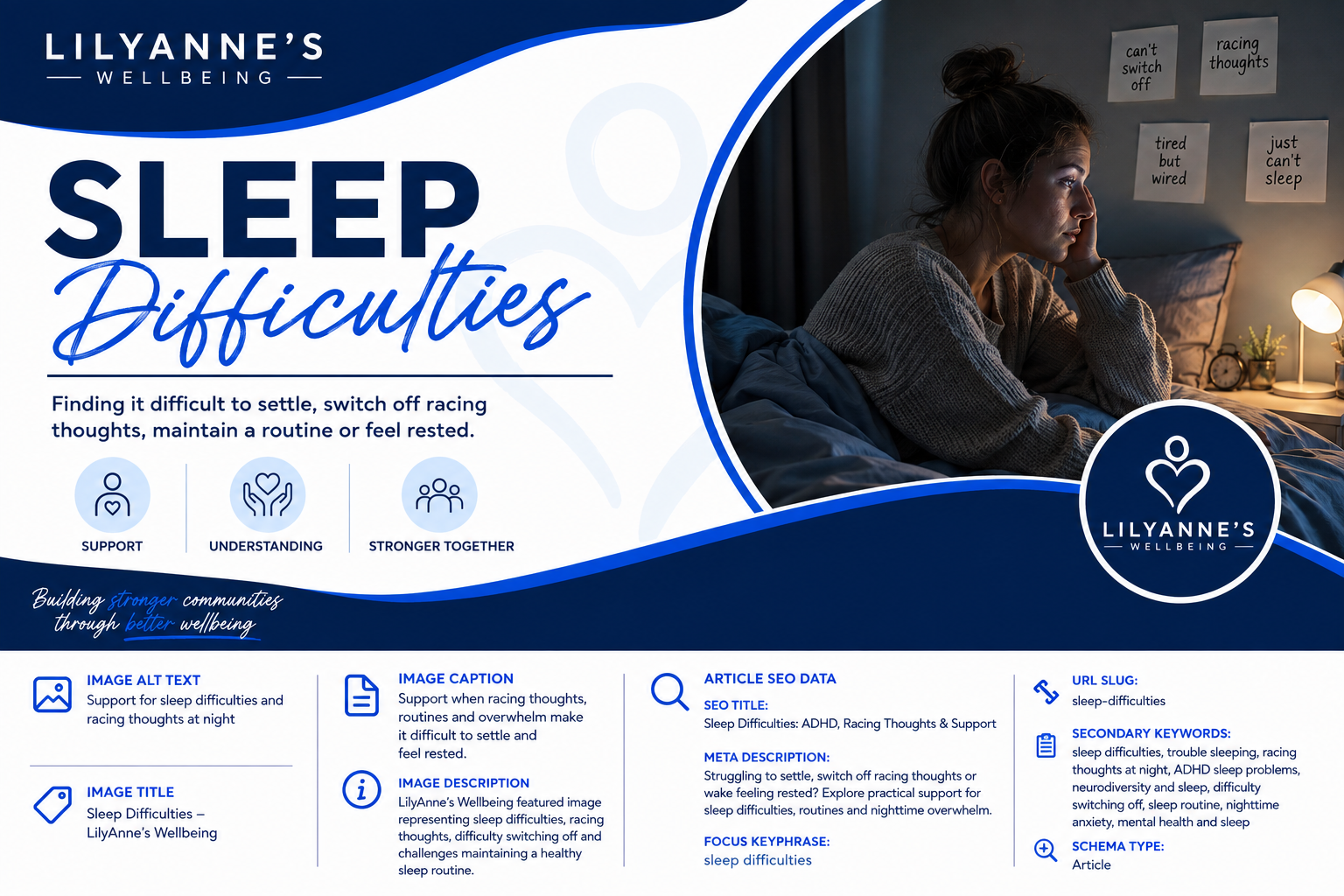
Sleep should be a chance for our minds and bodies to recover. But for many people, getting into bed doesn’t mean being able to switch off.
You might feel exhausted all day, only to become wide awake the moment your head hits the pillow. Your thoughts may start racing, conversations replay in your mind, tomorrow’s responsibilities suddenly feel urgent, or you find yourself reaching for your phone because lying quietly feels impossible.
For people with ADHD, other neurodivergent experiences, anxiety or ongoing stress, difficulties with sleep can become part of a frustrating cycle.
At LilyAnne’s Wellbeing, we understand that being told to simply “go to bed earlier” rarely addresses what is actually happening.
What Do Sleep Difficulties Look Like?
Sleep difficulties aren’t always about being completely unable to sleep.
You may experience:
- Difficulty settling down at night
- Racing or repetitive thoughts when trying to sleep
- Feeling physically tired but mentally alert
- Losing track of time in the evening
- Struggling to maintain a consistent bedtime routine
- Waking frequently throughout the night
- Finding it difficult to get back to sleep
- Sleeping for long periods but still feeling exhausted
- Struggling to wake up or get started in the morning
- Staying awake much later than you intended
- Feeling anxious about whether you’ll be able to sleep
When this happens regularly, it can begin affecting much more than your nights.
ADHD and Sleep
Sleep difficulties are commonly reported by people with ADHD.
For some people, the transition from daytime activity to sleep can be particularly challenging. The stimulation and structure of the day disappear, leaving space for thoughts that haven’t had an opportunity to surface earlier.
You might suddenly remember something you need to do.
One thought leads to another. You pick up your phone to check something quickly, become absorbed in it and suddenly realise another hour has passed.
There can also be difficulties around routines and time awareness. You may know that going to bed at a consistent time would help, but actually making that transition can feel much harder than it sounds.
This isn’t necessarily about a lack of understanding or willingness. Executive functioning difficulties can make starting, stopping and transitioning between activities genuinely challenging.
When Racing Thoughts Take Over
Nighttime can sometimes feel like the moment your brain decides to process everything at once.
You might replay something somebody said earlier in the day, worry about tomorrow, think about something that happened years ago and then suddenly remember an email you forgot to send.
Trying to force yourself not to think can sometimes make those thoughts feel even louder.
Instead, it can be helpful to recognise that your mind may need time and space to transition from activity into rest.
That transition won’t look the same for everybody.
The Impact of Poor Sleep
Persistent sleep difficulties can affect almost every area of everyday life.
When you’re exhausted, things that would normally feel manageable can become significantly harder.
You may notice changes in:
Concentration
Focusing, processing information and completing tasks may become more difficult.
Emotional Regulation
When you’re exhausted, frustration, anxiety, irritability or emotional overwhelm can become more intense.
Motivation
Tasks can feel much harder to begin when you’re already mentally and physically depleted.
Executive Functioning
Planning, organisation, remembering things and managing everyday responsibilities may become more challenging.
Relationships
Exhaustion can affect patience, communication and your capacity to engage with other people.
Over time, poor sleep and everyday overwhelm can begin feeding into one another.
You’re exhausted because you haven’t slept well, everyday demands become harder because you’re exhausted, and then those unfinished tasks and worries follow you back to bed.
Creating a Routine That Works for You
Sleep advice often focuses heavily on creating the “perfect” nighttime routine.
But routines need to be realistic.
A complicated routine involving numerous steps may actually create another expectation that feels difficult to maintain.
Instead, consider making the transition towards sleep simpler.
That might mean dimming the lights, reducing stimulating activities before bed, preparing things for the following morning earlier in the evening or creating a consistent cue that tells your brain the day is beginning to finish.
For some people, writing down thoughts or tomorrow’s tasks can also help reduce the feeling that everything needs to be remembered overnight.
The goal isn’t perfection.
It’s finding something sustainable enough to support you consistently.
Reducing the Pressure Around Sleep
Worrying about sleep can sometimes become another barrier to sleeping.
You look at the clock.
You calculate how many hours are left before you need to wake up.
Then you calculate it again twenty minutes later.
The pressure builds, and suddenly falling asleep feels like another task you’re failing to complete.
It can be helpful to move away from judging yourself for struggling.
Sleep difficulties can be influenced by many different factors, including stress, routines, environment, emotional wellbeing, neurodivergence, medication and physical health.
Understanding what’s contributing to your difficulties can be more useful than blaming yourself for them.
You Don’t Have to Figure It Out Alone
Sometimes sleep difficulties aren’t really about sleep.
They can be connected to everything you’re carrying during the day.
Stress, relationships, work, caring responsibilities, anxiety, grief, burnout, sensory overwhelm or constantly trying to keep up can all follow us into the night.
Having somewhere to talk openly about what’s happening can help you begin identifying those pressures and finding ways to make everyday life feel more manageable.
At LilyAnne’s Wellbeing, our support isn’t about judging your routine or giving you another list of things you’re supposed to be doing.
It’s about understanding what’s happening for you.
Through our counselling, listening support and neurodiversity-focused support, we can help you explore challenges around routines, overwhelm, racing thoughts, executive functioning and everyday wellbeing.
Finding What Works for You
There isn’t one bedtime routine, technique or solution that works for everybody.
For some people, the biggest change comes from creating more structure. For others, it’s reducing stimulation, managing daytime pressures or understanding how ADHD and executive functioning affect their evenings.
Sometimes simply understanding why something feels difficult can be the beginning of changing it.
If sleep difficulties are affecting your wellbeing, relationships, work or ability to manage everyday life, you don’t have to wait until you’re completely exhausted before reaching out.
LilyAnne’s Wellbeing is here to listen, understand and help you find practical support that works for you.
If you have persistent sleep problems, significant daytime sleepiness, breathing difficulties during sleep or another concern about your health, speak to your GP or another appropriate healthcare professional. Wellbeing support can complement, but does not replace, medical assessment or treatment.
