
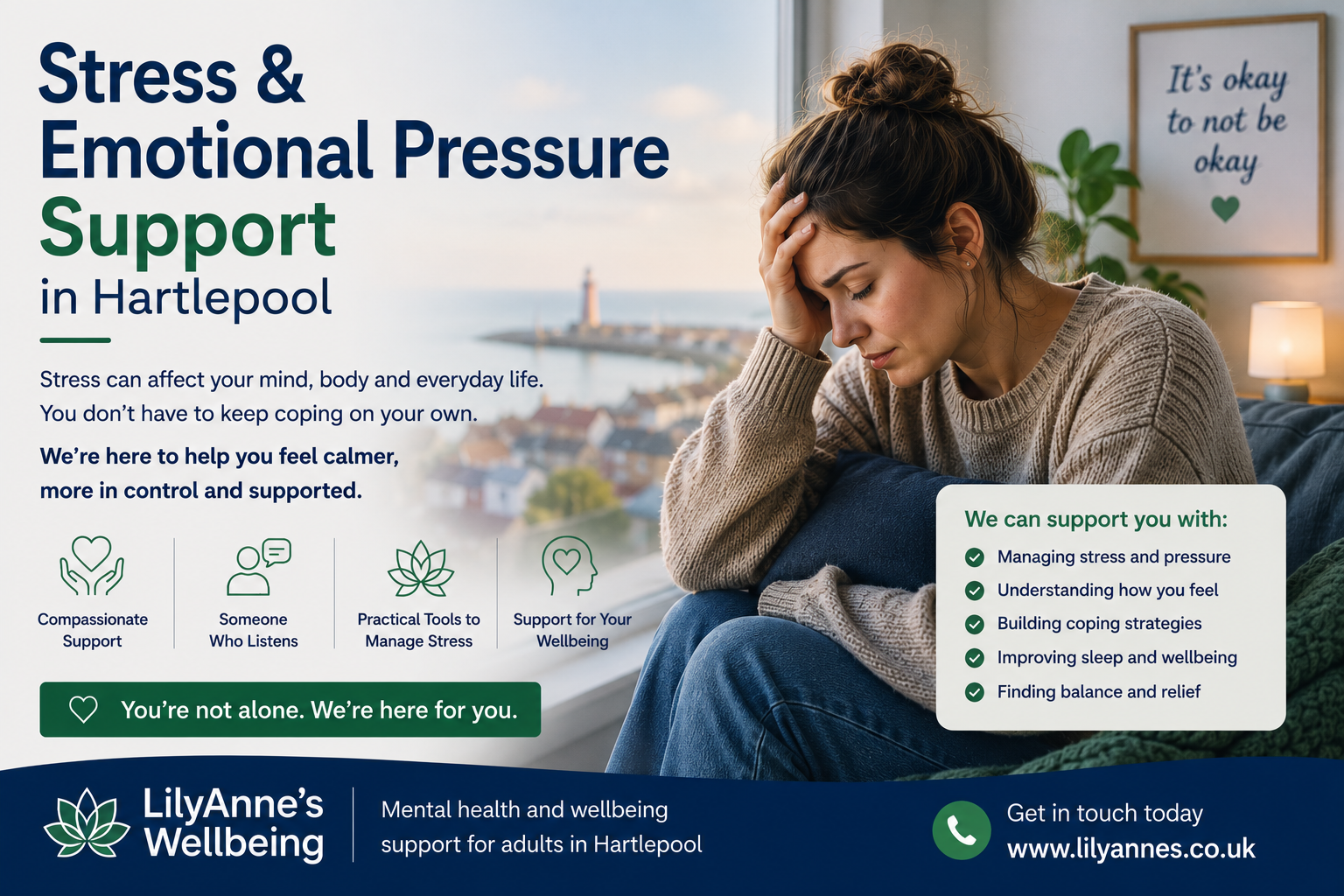
Stress & Emotional Pressure
Stress is a natural response to pressure, uncertainty or difficult experiences, but when stress becomes ongoing or overwhelming, it can begin affecting both mental and physical wellbeing.
Many people experiencing stress feel constantly under pressure, emotionally exhausted or unable to switch off. Over time, emotional pressure can affect sleep, relationships, work, confidence and the ability to cope with everyday life.
At LilyAnne’s Wellbeing, we understand that stress is not always visible from the outside. Many people continue trying to manage responsibilities, support others and “keep going” while silently struggling with emotional exhaustion, anxiety and overwhelm internally.
What Stress Can Feel Like
Stress affects everyone differently, but common experiences may include:
- racing thoughts,
- irritability,
- feeling emotionally overwhelmed,
- panic or anxiety,
- difficulty relaxing,
- poor sleep,
- exhaustion,
- muscle tension,
- headaches,
- feeling constantly “on edge,”
- emotional shutdown,
- or difficulty concentrating.
Some people may also notice changes in appetite, motivation, confidence or emotional resilience during prolonged periods of stress.
Causes of Stress & Emotional Pressure
Stress can develop from many different experiences, including:
- work or financial pressure,
- relationship difficulties,
- trauma,
- caring responsibilities,
- parenting pressures,
- grief,
- housing difficulties,
- health concerns,
- social isolation,
- burnout,
- or ongoing uncertainty.
For autistic and ADHD individuals, emotional pressure may also be linked to masking, sensory overload, emotional dysregulation, routine disruption or environments that feel overwhelming and unsafe.
When Stress Becomes Too Much
Ongoing stress without enough rest, support or recovery can begin affecting mental health significantly.
Over time, prolonged emotional pressure may contribute towards:
- anxiety,
- depression,
- burnout,
- panic attacks,
- emotional numbness,
- low self-esteem,
- exhaustion,
- or feeling unable to cope.
Some people may also begin withdrawing from others or using unhealthy coping strategies to manage emotional distress.
You Are Not Failing for Struggling
Many people experiencing stress feel pressure to continue coping, even when emotionally exhausted. Others minimise their own wellbeing because they are focused on work, caring responsibilities or supporting others around them.
But needing support does not mean you are weak.
Everyone has a limit, and emotional wellbeing matters just as much as physical health.
Supporting Emotional Wellbeing During Stress
Helpful coping strategies may include:
- slowing down where possible,
- improving rest and sleep,
- setting healthier boundaries,
- talking openly about emotions,
- reducing overstimulation,
- spending time in safe environments,
- accessing emotional wellbeing support,
- counselling,
- and reconnecting with supportive people around you.
Small changes can make a significant difference over time.
When to Seek Help
It may be important to seek support if stress or emotional pressure is:
- affecting your daily life,
- impacting work or relationships,
- causing anxiety or panic attacks,
- affecting sleep or physical wellbeing,
- leading to emotional exhaustion,
- or leaving you feeling unable to cope.
At LilyAnne’s Wellbeing, we provide safe, compassionate and neurodiversity-friendly support for individuals experiencing stress, emotional overwhelm, burnout and mental health difficulties.
You do not have to manage everything alone.
