
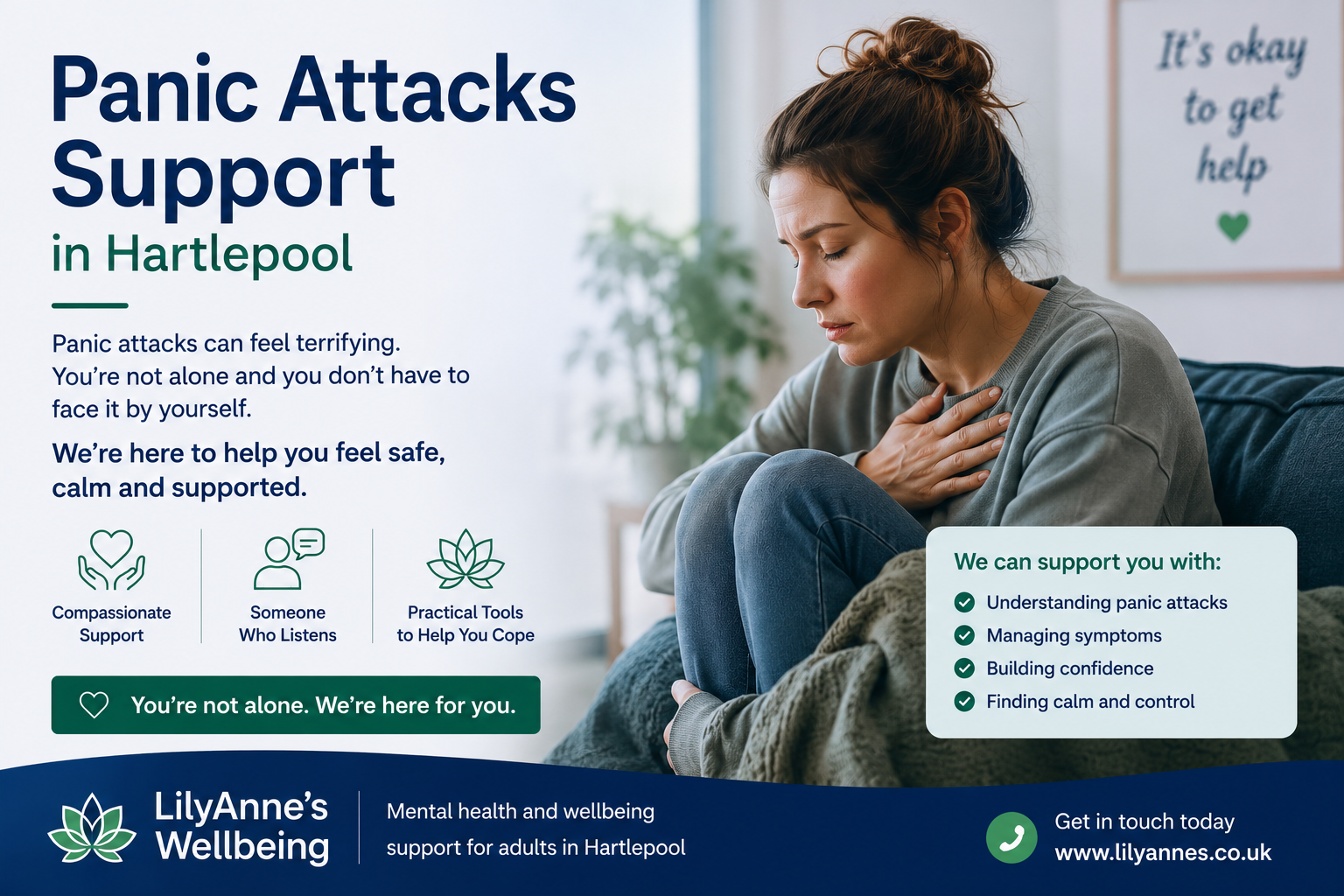
Panic Attacks & Panic Disorder
Panic attacks can feel frightening, intense and overwhelming, especially when they happen unexpectedly or begin affecting everyday life. Many people experiencing panic attacks describe feeling as though they are losing control, unable to breathe, or even fearing they are seriously unwell.
Although panic attacks can feel extremely distressing, you are not alone, and support is available.
At LilyAnne’s Wellbeing, we understand how exhausting anxiety, panic and emotional overwhelm can become, particularly when people feel trapped in cycles of fear, avoidance or constant worry about when the next panic attack may happen.
What is a Panic Attack?
A panic attack is a sudden surge of intense anxiety or fear which can cause both emotional and physical symptoms. Panic attacks can happen unexpectedly or may be triggered by stress, overwhelm, trauma, social situations or certain environments.
Panic attacks are the body’s response to feeling unsafe or overwhelmed, even when there may not be immediate danger present.
Common Symptoms of Panic Attacks
People experience panic attacks differently, but common symptoms may include:
- rapid heartbeat,
- chest tightness or chest pain,
- dizziness,
- shaking,
- sweating,
- shortness of breath,
- tingling or numbness,
- nausea,
- feeling detached or unreal,
- fear of losing control,
- or fear that something terrible is about to happen.
For many people, these symptoms can feel frightening and confusing, especially during a first panic attack.
Panic Disorder
Some individuals may begin experiencing recurring panic attacks alongside ongoing fear or anxiety about future attacks. This can sometimes lead people to avoid places, situations or environments where panic attacks have happened before.
Over time, this can affect:
- confidence,
- social situations,
- work,
- relationships,
- travel,
- routines,
- and emotional wellbeing.
People living with panic disorder often describe feeling constantly “on alert,” worried about when panic may return.
Panic Attacks and Mental Health
Panic attacks are often linked to:
- anxiety,
- emotional overwhelm,
- burnout,
- trauma,
- stress,
- depression,
- neurodiversity-related overload,
- or long periods of emotional pressure.
For autistic and ADHD individuals, panic may also be connected to sensory overwhelm, masking, social exhaustion, uncertainty or emotional dysregulation.
You Are Not “Overreacting”
Many people experiencing panic attacks feel embarrassed, ashamed or misunderstood, particularly when others cannot see the emotional distress happening internally.
But panic attacks are real, distressing experiences and deserve understanding and support.
You are not weak for struggling.
Coping Strategies During Panic Attacks
Different strategies work for different people, but helpful approaches may include:
- grounding techniques,
- slowing breathing,
- reducing sensory overload,
- using calming routines,
- moving to a safe environment,
- talking to someone trusted,
- learning emotional regulation techniques,
- and accessing emotional wellbeing or counselling support.
Understanding your triggers and recognising early signs of overwhelm can also help reduce the intensity and frequency of panic attacks over time.
When to Seek Help
It may be important to seek support if:
- panic attacks are becoming frequent,
- anxiety is affecting your daily life,
- you are avoiding situations because of panic,
- your sleep or wellbeing is affected,
- you feel emotionally overwhelmed,
- or you feel unable to cope alone.
At LilyAnne’s Wellbeing, we provide safe, compassionate and neurodiversity-friendly support for individuals experiencing panic attacks, anxiety, emotional overwhelm and mental health difficulties.
You do not have to manage panic alone.
